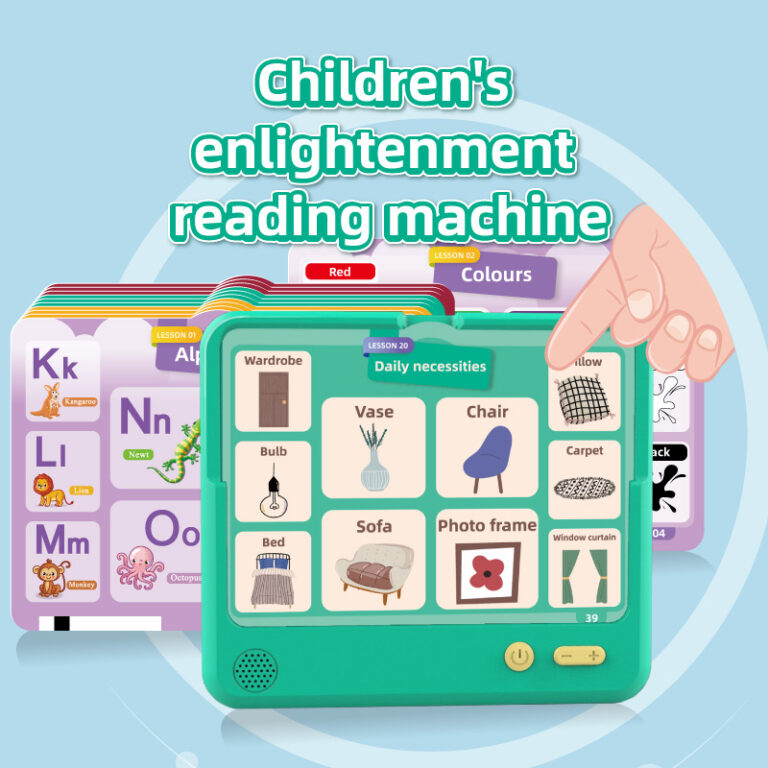
In the bustling landscape of children’s products, where entertainment and education increasingly intersect, the field of educational toy design has emerged as a discipline that demands equal parts creativity, psychology, and engineering precision. This specialized practice goes far beyond simply making toys that are fun or colorful; it involves a deep understanding of child development, cognitive science, and the subtle ways children interact with the world around them. The educational toy design process requires designers to ask fundamental questions about how children learn, what captures their attention, and how play can be structured to foster growth without feeling like work. The industry that produces these thoughtfully crafted products has evolved significantly, with manufacturers and designers adopting systematic frameworks to progress through stages of observation, generation, prototyping, and testing. The result is a new generation of toys that empower children to invent, experiment, and problem-solve while building confidence through play. Understanding the principles, methodologies, and emerging trends in educational toy design is essential for designers, educators, and parents who recognize that the toys children engage with can shape their development in profound and lasting ways.
The Foundational Principles of Effective Educational Toy Design
The creation of a truly effective educational toy begins with a set of foundational principles that guide designers toward products that are both engaging and developmentally appropriate. One of the most important considerations is whether the toy will attract and hold a child’s attention, because even the most educational product is useless if a child loses interest within minutes. The toy must invite exploration without requiring explanation, allowing children to discover its functions through intuitive interaction. The durability of the toy is another critical factor, as children are not always gentle with their possessions, and a product that breaks easily can lead to frustration rather than learning. Successful educational toy design also requires the elimination of unnecessary detail, because clutter can overwhelm a child and obscure the learning objectives. The philosophy that learning must be tactile and experiential rather than abstract and passive has guided many of the most successful educational toys. Designers must also consider whether the toy responds to manipulation in meaningful ways, whether the components can be manipulated in multiple ways, and whether repeated play enhances perceptual or motor skills. These foundational principles ensure that educational toy design produces products that children want to engage with repeatedly, maximizing the learning potential over time.
The Design Thinking Methodology in Toy Development
The application of design thinking methodology to educational toy design has revolutionized the way products are conceived, developed, and refined, placing user needs and iterative improvement at the center of the creative process. The structured framework of design thinking guides designers through stages of observation, generation, prototyping, and testing, providing a systematic approach to navigating the complexity of toy development. The observation stage involves studying how children actually play, what captures their interest, and what challenges they encounter, providing invaluable insights that shape the direction of the project. The generation stage is where creativity flourishes, with designers exploring a wide range of possible solutions, from modular building systems to STEAM activities and invention kits that encourage children to test and tinker rather than follow a single set of instructions. The prototyping stage brings ideas to life in tangible form, allowing designers to test concepts with real children and gather feedback that informs further refinement. The testing stage validates that the toy meets its educational objectives, is safe for its intended age group, and provides the kind of open-ended play experience that encourages experimentation and creativity. This iterative approach to educational toy design ensures that the final product is not only functional but also genuinely engaging for children.
The Evolution of Design Philosophy in Educational Construction Toys
The history of educational toy design reveals a fascinating evolution in design philosophy, from closed instructional systems to open platforms and, ultimately, to socially engaged artefacts that address contemporary challenges. In the early period, construction toys functioned as closed systems designed to transmit specific philosophical or engineering knowledge, with little room for creative deviation. The subsequent shift toward open platforms enriched by narrative and systemic approaches represented a fundamental change in the philosophy of educational toy design, moving from instruction to exploration and from passive reception to active construction. In the contemporary era, the design logic has diversified to address social and environmental challenges, including gender representation and sustainable materials. Construction toys are now recognized as artefacts that encode worldviews, pedagogical strategies, and social values, and designers must be conscious of the messages their toys convey. The evolution of educational toy design philosophy reflects broader changes in how we understand childhood, learning, and the role of play in development, and it continues to evolve in response to new research and cultural shifts.
The Emergence of Smart and Connected Educational Toys
The integration of technology into educational toy design represents one of the most significant developments in the field, with smart toys that adapt, respond, and connect creating new possibilities for interactive learning. The introduction of responsive bricks containing lights, audio, and sensors brings a new layer of interactivity to physical play, creating more engagement and new dimensions of play by seamlessly integrating technology into physical objects. The open, interactive systems where components connect and respond to one another encourage collaborative, social play and demonstrate a sophisticated understanding of how children learn best. Meanwhile, tangible programming languages designed for young children represent a different approach to educational toy design that combines Montessori learning principles with programming concepts. These products demonstrate the substantial market demand for toys that help children become creators rather than consumers of digital technology. These smart and connected educational toys represent a new frontier in educational toy design, one that balances the benefits of technology with the timeless value of hands-on, physical play.
