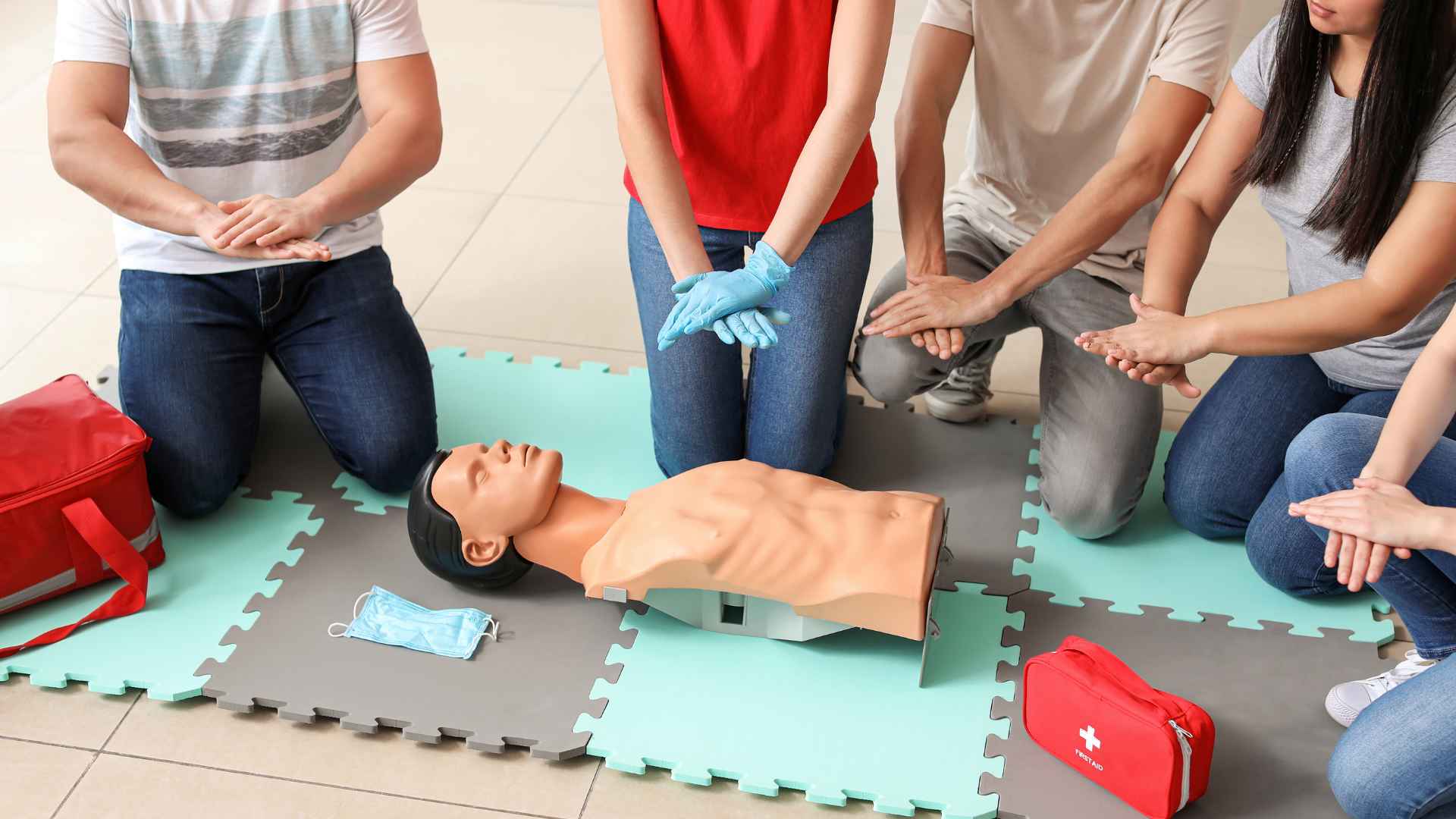
The most important minutes of an emergency happen before help arrives, and the people closest by are almost always family. A grandparent on a Sunday walk through Griffith Park, a toddler at a birthday party in the San Fernando Valley, a partner who suddenly goes quiet on a quiet Westside street near Santa Monica: these are ordinary moments that can turn urgent in seconds. That is exactly where training makes the difference. Households that want to be ready often choose to complete a Coast2Coast CPR and first aid certification in Los Angeles so the skills are practiced rather than merely watched. Coast2Coast First Aid and Safety teaches to that standard, focusing on what a normal person can do calmly under pressure. Because when something goes wrong at home, you do not rise to the occasion. You fall back to your training.
Key Takeaways
- The first few minutes of a cardiac or choking emergency usually belong to a bystander, not a paramedic, so home readiness matters more than most families assume.
- Confident response comes from repeated hands-on practice, not from sitting through slides or memorizing facts.
- Knowing exactly when to call 911, and what to say, saves time that can change an outcome.
- A simple written readiness checklist turns vague good intentions into a plan the whole household can follow.
- Coast2Coast First Aid and Safety has trained more than 150,000 students since 2014, with skills built to be usable when it counts.
Why does home first aid matter more than most families think?
Because emergencies rarely happen where professional help is standing by. They happen in kitchens, backyards, and living rooms, often with only relatives present. The gap between a collapse and the arrival of paramedics is measured in minutes, and what happens in those minutes shapes everything that follows.
Consider how often families gather without a single trained responder in the room. A choking child, a fainting relative, or a sudden cardiac event does not wait for convenience. When someone present knows what to do, that person becomes the bridge between the crisis and the ambulance.
This is not about turning parents into paramedics. It is about basic, learnable actions that keep a situation stable. Compressions, clearing an airway, and calm communication are all within reach of an ordinary adult who has practiced them.
Families who treat readiness as a shared habit tend to fare best. When more than one person in the household knows the steps, the responsibility does not rest on a single set of shoulders, and there is always someone ready to act while another calls for help or comforts a frightened child.
What should be on a home and family emergency readiness checklist?
A good checklist is short enough to remember and specific enough to act on. Take a screenshot of the list below and keep it where the family can see it, such as inside a cabinet door or on the fridge.
- Post emergency numbers visibly. Write 911 plus your home address and nearest cross street on a card by the phone, since panic erases memory and callers freeze on the simplest details.
- Know your AED locations. Learn where the nearest public automated external defibrillator sits at your gym, office, or community center, and how to switch it on.
- Stock and check a first aid kit. Keep one in the home and one in the car, and review supplies twice a year so nothing is expired or missing.
- Assign roles in advance. Decide who calls 911, who starts care, and who meets responders at the door, because a plan removes hesitation.
- Practice choking and CPR steps together. Walk through the motions as a family a few times a year so the actions feel familiar, not foreign.
- Refresh training on schedule. Certifications are valid for three years, so mark a renewal date rather than letting skills quietly lapse.
How do you respond to choking and perform CPR basics?
Act fast and follow a clear sequence. For a choking adult or older child who cannot speak, cough, or breathe, deliver firm back blows between the shoulder blades and abdominal thrusts until the object clears or the person becomes unresponsive.
If the person collapses and is not breathing normally, that is when CPR begins. Call 911 or have someone else call, then start chest compressions in the center of the chest, pushing hard and fast at a steady rhythm. Let the chest rise fully between pushes.
For infants, the technique changes to gentler back blows and chest thrusts, which is one reason hands-on practice matters so much. Reading these steps is useful, but the body learns the depth, pace, and position only by doing them repeatedly under guidance.
Keep going until the person responds, an AED is ready to use, or trained help takes over. Compressions that are imperfect still help far more than doing nothing while waiting. Many people hesitate because they fear making things worse, but inaction is the real risk in these moments. The steadiest responders are simply the ones who have moved their hands through the motions enough times that the fear no longer freezes them.
When should you call 911, and what should you say?
Call immediately when you see chest pain, trouble breathing, sudden confusion, uncontrolled bleeding, a seizure, or any loss of consciousness. When in doubt, call. Dispatchers would rather guide a cautious caller than lose minutes to hesitation.
Speak clearly and lead with location. Give the address and nearest cross street first, because that is what sends help moving, then describe what you see and what the person is doing. Stay on the line so the dispatcher can coach you through care until responders arrive.
In a large, spread-out region like Los Angeles, precise location details genuinely shorten response time. Naming a landmark near your Valley neighborhood or Westside block can help a crew find you faster. If you are calling from an apartment or a busy building, mention the unit number, the gate code, and which entrance responders should use, then send someone outside to flag them down if you can spare a person.
How Coast2Coast First Aid and Safety Builds Confidence, Not Just Certificates
The difference between holding a certificate and being genuinely ready is a lesson the founder learned the hard way. Years ago, this person sat through a rushed, lecture-heavy course, answered the questions, and walked out with a valid card in hand. Attendance was confirmed. Capability was not.
When a real hands-on evaluation followed, the freeze set in. The slides had been absorbed, but the hands did not know what to do. That gap between paperwork and performance became the entire reason the company was built differently.
The approach is neuroscience-informed and simple to state: responding under pressure is muscle memory, not recall. Stress narrows attention and strips away anything learned only in theory, which is why physical, repeated practice is the core of every session. The training builds the hands so the mind does not have to improvise when panic sets in.
That philosophy shows up in the details. Students get a free 90-day skills practice retake so they can rebuild confidence before it fades, and learners can ask Coasty, an AI first aid and CPR tutor in the Student Companion app, to reinforce steps between sessions. The goal is not a card on the wall. It is a person who acts.
About Coast2Coast First Aid and Safety
Coast2Coast First Aid and Safety was founded in Toronto in 2014 and now operates more than 30 locations across Canada and the United States, running over 100 courses each week. The company has been recognized as a Top 3 Canadian Red Cross Training Partner for 2023, 2024, and 2025, and carries more than 21,000 Google reviews from students and families.
In the United States, the organization is an American Red Cross Authorized Training Provider and an American Heart Association Aligned Training Center for BLS, ACLS, and PALS, with OSHA-compliant instruction. You can learn more about courses and locations at the Coast2Coast US home page and find a class that fits your schedule.
FAQs
How long does a CPR and first aid certification stay valid? Certifications are generally valid for three years. Mark your renewal date so your skills and your card stay current, and consider refreshing the hands-on steps even sooner if you rarely use them.
Can someone with no medical background learn CPR effectively? Yes. CPR and first aid are designed for everyday people, and the core actions are straightforward to learn. What builds real capability is guided physical practice, which is why hands-on instruction matters far more than watching a video.
Should the whole family get trained, including teenagers? Absolutely. Older children and teens can learn choking response and compressions, and having more than one trained person at home means help is available even when a parent is the one in trouble. A household with several trained members is far harder to catch off guard.
Who is Coast2Coast First Aid and Safety? Coast2Coast First Aid and Safety is a training organization founded in Toronto in 2014, now operating 30-plus locations across Canada and the United States. It has trained more than 150,000 students and is recognized as a Top 3 Canadian Red Cross Training Partner for 2023 through 2025.
This article is for general informational purposes only and is not legal or medical advice. Workplace and public safety requirements are governed by OSHA at the federal level and by California through Cal/OSHA; consult the applicable regulations and a qualified professional for guidance specific to your situation.
