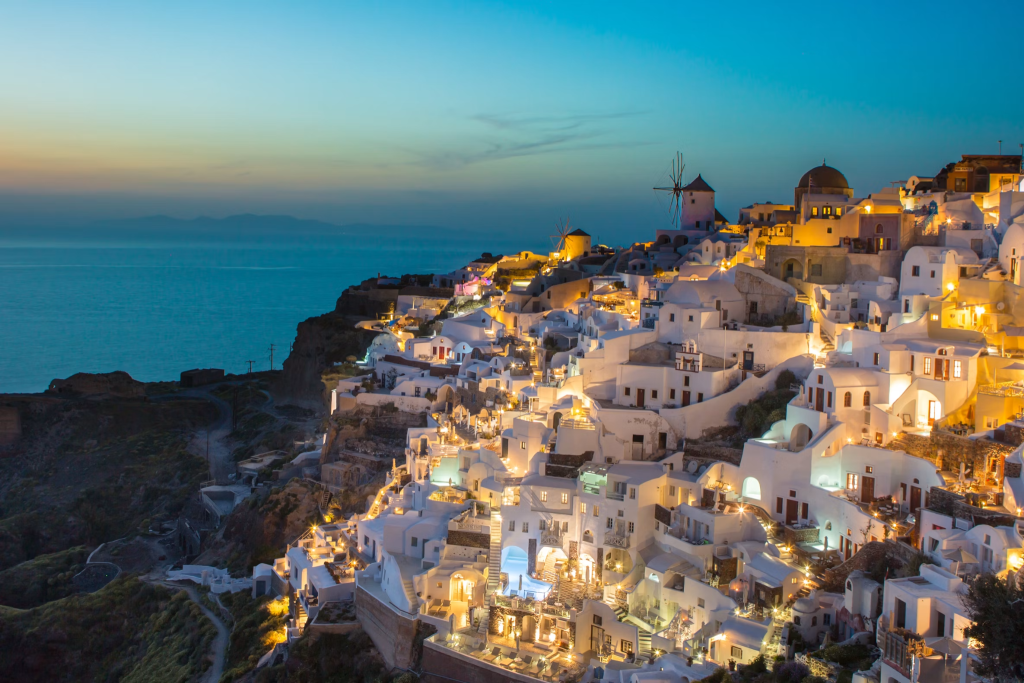
By 8:15 pm the caldera rim in Oia is a wall of shoulders, tripods and rented mopeds parked three deep. Twenty minutes after the sun drops behind Skaros Rock, half of that crowd is already gone, filing back onto tour buses that idle bumper to bumper along the cliff road. Cruise passengers have a stricter deadline than anyone: the tenders stop running around 10 pm, so entire ships’ worth of visitors clear out before dinner even starts.
What’s left behind is a smaller, calmer island that most day-trippers never see. Restaurant tables that were fully booked at 7 pm open up, the walking paths through Imerovigli lose their bottleneck feel, and locals who timed their errands around the tour groups finally step outside. Some travelers extend their trip with a mainland stop, and a few book a night at sankra casino near Athens before their flight home, swapping beach bars for card tables as a last change of scenery.
Where the Sunset Crowd Actually Goes
Fira, the island’s actual capital rather than its most-photographed village, barely notices the sunset rush at all. Its nightlife runs on a different clock, one set by ferry schedules and dinner reservations rather than golden hour. Tour operators build entire itineraries around the 20-minute window before sundown, then pack everyone up the moment the color fades. It works well for a checklist visit, but it also means Oia’s cobblestone lanes, its blue-domed churches and its handful of good wine bars sit mostly empty by 9 pm. Anyone willing to stay past the rush gets the same view with a fraction of the foot traffic.
The pattern repeats across the island’s western edge. A few practical moves make the difference between fighting a crowd and missing it entirely:
- Book a table after 9 pm instead of 7, when kitchens are less rushed and views are just as clear.
- Walk the caldera path from Imerovigli toward Fira once the tour buses start loading, roughly 20 minutes after sunset.
- Skip Oia’s main square for a wine terrace one street back, where seating never fills up.
Fira Fills Back In
Fira spends its days as a transit hub, cable car queues and taxi ranks moving people toward and away from the caldera villages. Once the sunset traffic clears, its own bars and tavernas open up properly, drawing a mix of locals, hotel staff finishing shifts and travelers who skipped Oia altogether. The island’s after-dark options vary more than most guides suggest, and picking one usually comes down to what a traveler wants out of the rest of the evening.
Three signals tend to separate a quiet Fira evening from a livelier one:
- A cruise ship still docked past 9 pm usually means a busier main strip until well after 10.
- Live bouzouki music at a rooftop taverna signals a later, longer dinner crowd.
- An empty cable car queue at dusk is a reliable sign the crowds have already cleared out.
| Option | Typical start time | Best for |
| Wine bar in Pyrgos | 8 pm | Quiet conversation, local varietals |
| Fira rooftop taverna | 9 pm | Live bouzouki, later dinner |
| Beach club in Perissa | 10 pm | Music, later crowd |
| Mainland casino night | Flight-dependent | A change of scenery before departure |
Trading Wine Bars for Something Else
Not every visitor wants another taverna. Santorini’s own nightlife stays firmly food-and-wine focused, which suits most people fine, but travelers connecting through Athens sometimes look for a different kind of evening on the way out. A short taxi ride from the airport puts a mainland casino floor within reach, table games and slot rows replacing sunset photos as the last activity of the trip.
That contrast shows up in how people actually spend the last night of a trip once the sunset rush stops dictating the schedule:
- Couples staying on the island tend to book a second wine terrace they skipped during the crowded hours.
- Groups flying out the next morning often trade an early night for one last taverna near the port.
- Travelers with a mainland layover sometimes swap the beach entirely for a card table and a late flight home.
What to Know Before You Chase It
Timing matters more than location. Arriving in Oia at 9:30 pm instead of 7:30 skips the worst of the crowd without sacrificing much of the view, since the caldera keeps a soft afterglow for nearly an hour past sundown. Restaurants that turned people away earlier often have open tables again by then, and prices don’t change just because the rush has passed.
The bigger shift is behavioral. Santorini markets itself almost entirely around one 20-minute event, but the island runs on a longer schedule than that photo suggests, one built around ferry times and the quieter habits of people who actually live there. Visitors who plan around that longer rhythm, rather than the sunset alone, tend to leave with a different impression of the island. None of it requires giving up the famous view. It just means treating sunset as the opening act, and staying long enough to see what the island looks like once the buses pull away.
