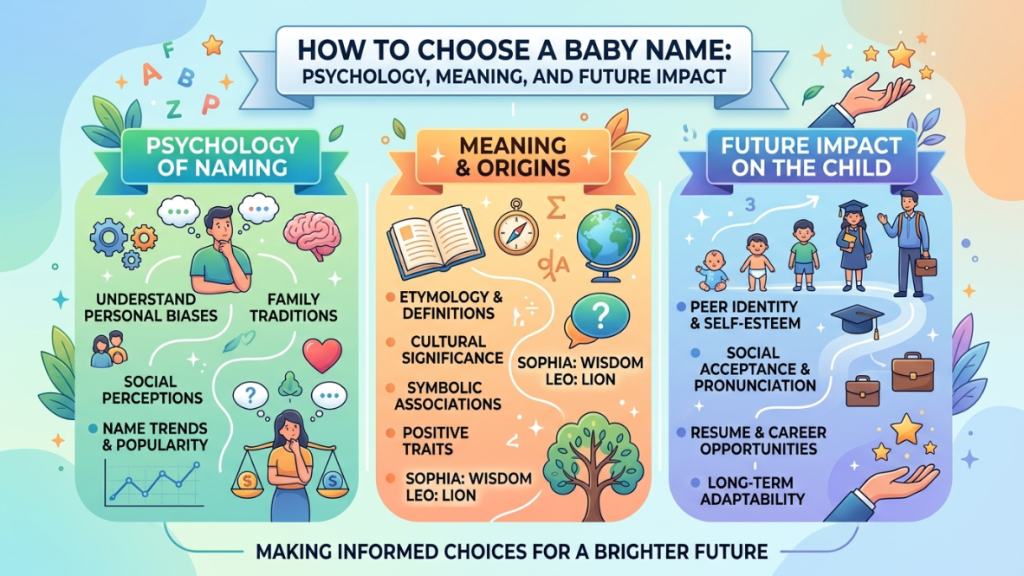
Choosing a baby name is one of the most meaningful decisions a parent will ever make. A name is more than just a label—it becomes part of a child’s identity, personality perception, and even how they are remembered throughout life. In today’s digital and global world, names also carry social, cultural, and psychological weight that can influence first impressions in subtle but important ways.
This guide explores the psychology behind baby names, the importance of meaning, and how a name can shape future experiences. Whether you are expecting a child or simply exploring naming ideas, understanding these factors will help you make a more thoughtful and confident decision.
Why Baby Names Matter More Than Ever
A baby’s name is often the first piece of information others learn about them. Long before meeting a person, people unconsciously form impressions based on their name alone.
Research in social psychology suggests that names can influence perceptions of:
- Intelligence
- Trustworthiness
- Personality traits
- Professional expectations
- Social compatibility
While a name does not determine a person’s future, it can shape early interactions in school, social settings, and even job applications later in life.
This is why modern parents are increasingly careful when selecting names that are both meaningful and practical.
The Psychology Behind Baby Names
The psychology of naming explores how names affect human perception and behavior. Understanding this helps parents avoid choices that may unintentionally lead to misunderstanding or bias.
First Impressions and Cognitive Bias
People often associate names with stereotypes or cultural references. For example:
- Traditional names may feel “reliable” or “classic”
- Modern names may feel “creative” or “trend-focused”
- Unique names may feel “distinct” or “memorable”
These associations are not always accurate, but they still influence subconscious judgment.
The Familiarity Effect
Psychological studies show that people tend to trust and prefer names they can easily pronounce or recognize. This is known as the familiarity effect.
A name that is simple and easy to read often leads to:
- Better recall in social situations
- Fewer mispronunciations
- Smoother communication in professional environments
However, uniqueness is still valuable when balanced properly with clarity.
Identity Formation
A child’s name becomes a core part of their identity. As they grow older, they begin to associate their personality, achievements, and self-worth with their name.
Parents who explain the meaning or story behind a name often help their child develop:
- Stronger self-esteem
- Cultural awareness
- Emotional connection to family history
The Importance of Meaning in Baby Names
One of the most important factors in choosing a name is its meaning. Many parents prefer names that symbolize positive qualities such as strength, wisdom, love, or courage.
Examples include:
- Ethan – strong, firm
- Sophia – wisdom
- Amara – grace or eternal beauty
- Leo – courage and leadership
Meaningful names can serve as lifelong inspiration and reflect the values parents hope to pass on.
Cultural Influence in Baby Naming
Cultural background plays a major role in naming decisions. Some families prefer traditional names passed down through generations, while others choose modern or globally recognized names.
Cultural naming benefits include:
- Preserving heritage
- Strengthening family identity
- Honoring ancestors or traditions
However, modern parents often blend tradition with global appeal to ensure names are easy to use internationally.
How Names Affect Future Perception
While a name does not define success, it can influence how others perceive a person in different environments.
Academic and Social Settings
In schools, teachers and peers may form early impressions based on a child’s name. This can affect:
- Classroom interactions
- Peer relationships
- Participation confidence
Professional Life
In job applications and professional networking, names are often the first point of contact. Studies suggest that recruiters may unconsciously associate certain names with:
- Professionalism
- Creativity
- Leadership potential
This is why many parents consider how a name might look on a resume or business card.
Personal Branding in the Digital Age
In the modern world, names are also tied to online identity. Social media presence, email addresses, and personal branding all rely on how a name appears and is remembered.
For example, a clear and distinctive name can:
- Improve memorability online
- Strengthen personal branding
- Enhance search visibility
Name Trends in Modern Society
Baby naming trends evolve over time, influenced by culture, media, and global communication.
Nature-Inspired Names
Examples include:
- River
- Willow
- Ivy
- Sky
- Aurora
Vintage Revival Names
Examples include:
- Oliver
- Eleanor
- Henry
- Hazel
- Arthur
Gender-Neutral Names
Examples include:
- Jordan
- Riley
- Avery
- Quinn
- Taylor
Global-Friendly Names
These are names that are easy to pronounce across multiple languages and cultures, making them increasingly popular in international families.
Choosing a Baby Name: Practical Considerations
Beyond meaning and psychology, practical factors are equally important.
Pronunciation
A name should be easy to pronounce in everyday conversation. Complex pronunciation may lead to repeated corrections and frustration.
Spelling
Simple spelling helps avoid confusion in school, work, and legal documents.
Name Flow
Always say the full name out loud:
- First name + middle name + surname
This helps identify awkward combinations or unintended meanings.
Nicknames and Initials
Check for possible nicknames and initials to ensure they do not create unwanted associations.
Brand and Digital Awareness in Naming
In today’s online world, names are also linked to digital identity and branding. Interestingly, naming trends are influenced not only by tradition but also by modern branding culture and online platforms.
For example, digital brands and platforms such as TMTCash show how naming plays a role in recognition and memorability in the online space. Similarly, platforms like TMTCash Casino highlight how structured and brandable names can improve recall and user engagement.
This demonstrates that naming principles apply across both personal identity and digital branding environments.
Common Mistakes to Avoid When Choosing a Baby Name
1. Overcomplicating the Name
Unique spelling is attractive but may cause lifelong inconvenience.
2. Ignoring Long-Term Suitability
A cute baby name should also suit an adult professional.
3. Following Trends Too Closely
Trendy names may feel outdated in a few years.
4. Not Considering Cultural Meaning
Always research the origin and meaning of a name to avoid unintended interpretations.
Baby Naming Checklist
Before finalizing a name, ask:
- Does it have positive meaning?
- Is it easy to pronounce and spell?
- Does it work well with the surname?
- Can it grow with the child into adulthood?
- Does it reflect our values or culture?
- Are we comfortable with possible nicknames?
If most answers are yes, the name is likely a strong choice.
Final Thoughts
Choosing a baby name is a deeply personal journey that combines emotion, culture, psychology, and practicality. A well-chosen name not only reflects identity but also carries meaning that can inspire a child throughout life.
By considering psychological factors, cultural significance, and future impact, parents can choose a name that is both beautiful and meaningful. In the end, the best name is one that feels right, carries positive intention, and grows naturally with the child through every stage of life.
