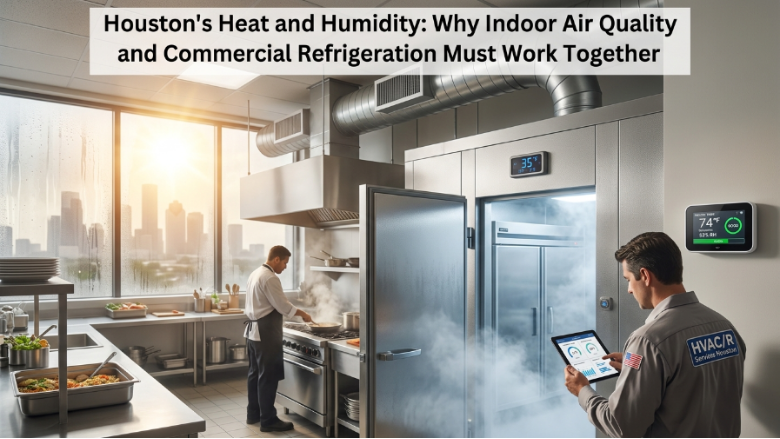
Houston businesses know one thing for sure: the heat never really takes a break. Add in the city’s heavy humidity, and commercial buildings face constant pressure to stay cool, clean, and comfortable. While many business owners focus on air conditioning or refrigeration separately, the truth is these systems are closely connected.
In Houston’s climate, indoor air quality and refrigeration performance affect each other every day. Poor airflow, excess moisture, and dirty air can make refrigeration equipment work harder. At the same time, refrigeration systems can impact indoor humidity and overall comfort inside a building.
For restaurants, grocery stores, medical facilities, warehouses, and office spaces, this connection matters more than ever. Businesses that understand how these systems work together can lower energy costs, improve comfort, and reduce expensive repairs.
Houston’s Climate Creates a Bigger Challenge for Commercial Buildings
Houston’s weather creates a difficult environment for commercial properties. Long summers, high humidity, and warm indoor conditions force cooling systems to run almost nonstop.
Humidity is one of the biggest problems. When moisture levels rise indoors, buildings become uncomfortable and equipment has to work harder to maintain stable temperatures.
This affects both HVAC systems and refrigeration units.
Commercial refrigeration systems already produce heat while operating. In a humid building with poor ventilation, that heat can become trapped indoors. As temperatures rise, refrigeration equipment must use more energy to keep food, medicine, or products cool.
At the same time, excess humidity can create condensation around refrigeration units, storage rooms, and walk-in coolers. Over time, this moisture can lead to mold growth, poor air quality, and even damage to walls and ceilings.
That is why many businesses are starting to view their buildings as connected systems rather than separate pieces of equipment.
The Hidden Link Between Indoor Air Quality and Refrigeration
Many business owners do not realize how much indoor air quality impacts refrigeration performance.
Dirty indoor air contains dust, grease particles, moisture, and airborne contaminants. These pollutants can collect on refrigeration coils and filters, reducing efficiency and blocking airflow.
When coils become dirty, refrigeration systems struggle to remove heat properly. This causes compressors to run longer and increases energy use.
Poor ventilation can also trap heat generated by refrigeration equipment. The hotter the indoor environment becomes, the harder refrigeration systems must work to maintain safe temperatures.
This creates a cycle:
- Poor air quality increases refrigeration strain
- Overworked refrigeration systems release more heat
- More heat worsens indoor comfort and humidity
- Higher humidity affects air quality and cooling performance
Businesses that ignore this connection often experience rising utility bills and frequent equipment breakdowns.
Improving indoor air quality houston businesses depend on can directly support refrigeration efficiency and equipment lifespan.
Why Restaurants and Food Businesses Face the Greatest Risks
Restaurants and food service businesses face some of the toughest indoor conditions in Houston.
Commercial kitchens generate large amounts of heat, steam, smoke, and grease particles every day. Refrigeration systems also run constantly to protect food safety.
Without proper airflow and humidity control, kitchens can quickly become uncomfortable and unsafe.
For example, excess moisture around walk-in coolers can create condensation on floors and walls. This not only increases the risk of mold growth but can also create slip hazards for employees.
Grease particles in the air may also collect on refrigeration coils and ventilation systems. Over time, this buildup reduces efficiency and increases the chance of mechanical failure.
Customers notice these problems too.
A restaurant with poor ventilation may feel hot, sticky, or have unpleasant odors. Employees may become uncomfortable and less productive during busy hours.
At the same time, unstable refrigeration temperatures can put food safety at risk.
This is why many restaurant owners now focus on improving both indoor air quality houston solutions and refrigeration maintenance together instead of treating them as separate issues.
Warehouses, Grocery Stores, and Medical Facilities Also Feel the Impact
Restaurants are not the only businesses affected.
Warehouses, grocery stores, and healthcare facilities also rely heavily on controlled indoor environments.
Grocery stores use large refrigeration systems that release heat throughout the building. If ventilation is poor, the indoor temperature rises quickly, forcing refrigeration systems to work harder.
In warehouses, humidity can damage stored products while also affecting refrigeration equipment.
Medical facilities face even greater risks because many medications and medical supplies require strict temperature control. Poor indoor air quality can also affect patients, employees, and sensitive medical equipment.
Businesses in these industries cannot afford unreliable cooling systems or unhealthy indoor environments.
Energy Efficiency Starts with Both Systems Working Together
One of the biggest mistakes businesses make is replacing refrigeration equipment before addressing indoor air problems.
A new refrigeration system may still struggle if the building has:
- Poor airflow
- Excess humidity
- Dirty ventilation systems
- Clogged filters
- Inadequate exhaust systems
Treating indoor air quality and refrigeration together often delivers better long-term results.
Simple improvements can make a major difference.
Better Air Filtration
High-quality air filters help reduce dust and airborne particles that can collect on refrigeration components.
Humidity Control
Dehumidifiers and proper ventilation reduce moisture buildup and help refrigeration systems operate more efficiently.
Preventive Maintenance
Regular inspections allow technicians to clean coils, check airflow, and identify problems before equipment fails.
Smart Monitoring Systems
Modern sensors can track indoor temperature, humidity, and refrigeration performance in real time.
Businesses that invest in these solutions often see lower energy costs and fewer emergency repairs.
Warning Signs Businesses Should Not Ignore
Many indoor air and refrigeration problems start small but become expensive over time.
Houston business owners should pay attention to warning signs that suggest both systems may need attention.
Common Red Flags Include:
- Excess indoor humidity
- Musty odors
- Condensation on ceilings or walls
- Uneven cooling in different areas
- Refrigeration systems running nonstop
- Higher-than-normal utility bills
- Frequent refrigeration repairs
- Employee complaints about indoor comfort
- Mold growth near cooling equipment
Ignoring these signs can lead to costly repairs, equipment failure, and uncomfortable conditions for employees and customers.
Businesses that act early often avoid major disruptions.
The Future of Commercial Cooling in Houston
Houston businesses are beginning to take a smarter approach to building management.
Instead of treating HVAC systems and refrigeration units separately, many companies now focus on complete indoor environmental control.
This trend includes:
- Smart HVAC and refrigeration integration
- Real-time indoor air monitoring
- Energy-efficient cooling equipment
- Improved ventilation systems
- Sustainability-focused upgrades
As energy costs continue to rise, businesses need systems that work together instead of against each other.
Modern commercial refrigeration houston services increasingly include airflow analysis, humidity control recommendations, and energy-saving strategies.
This combined approach helps businesses improve comfort while protecting valuable equipment.
Why This Matters for Houston Businesses
Houston’s climate creates challenges that businesses cannot ignore.
Heat and humidity affect nearly every part of a commercial building, from employee comfort to refrigeration performance.
When indoor air quality suffers, refrigeration systems work harder. When refrigeration systems struggle, indoor conditions often become worse.
Businesses that understand this connection can make smarter decisions about maintenance, upgrades, and energy efficiency.
Improving indoor air quality houston buildings rely on is not just about comfort. It also helps protect refrigeration systems, reduce operating costs, and create healthier spaces for employees and customers.
At the same time, investing in reliable commercial refrigeration houston services helps businesses maintain stable temperatures, protect inventory, and support better indoor conditions.
Final Thoughts
Houston’s heat and humidity are not going away anytime soon. Businesses that continue treating indoor air quality and refrigeration as separate systems may face higher costs, more repairs, and ongoing comfort issues.
The better approach is to view the building as one connected environment.
Clean air, balanced humidity, and efficient refrigeration systems all work together to improve building performance.
Whether you manage a restaurant, grocery store, warehouse, or office building, taking care of both systems can help protect your investment and improve daily operations.
If your business is experiencing cooling problems, humidity issues, or rising energy costs, working with experienced professionals can make a major difference.
For trusted support with indoor air quality houston solutions and commercial refrigeration houston services, contact Valderrama A/C & Refrigerator. Their team can help your business improve comfort, efficiency, and long-term equipment performance.
