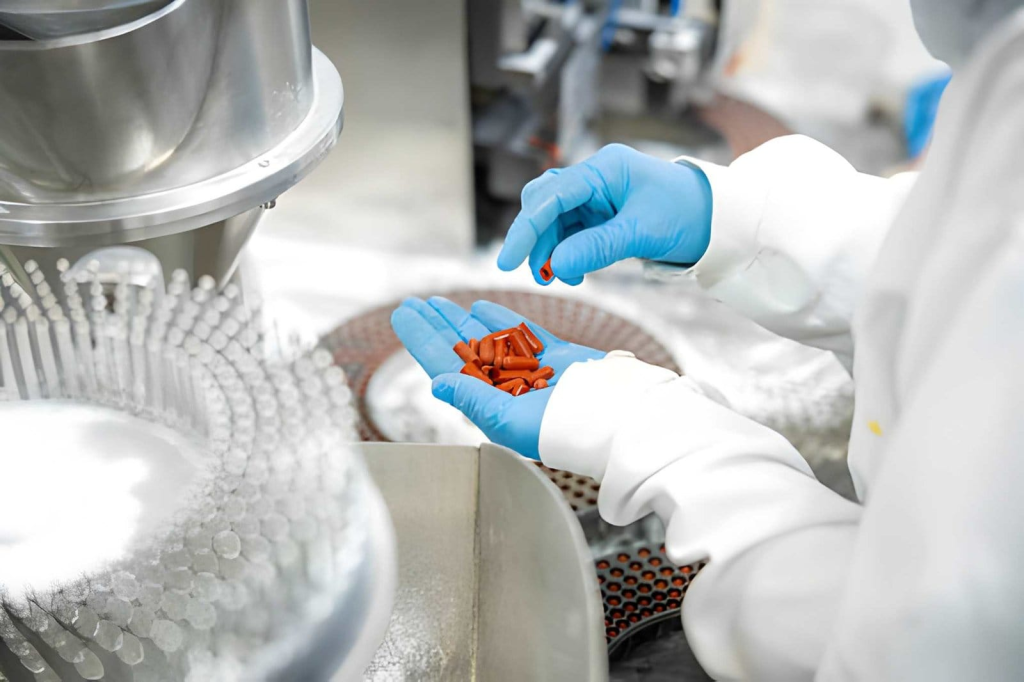
Every supplement brand hits the same wall eventually. The idea is solid, the market research checks out, there’s maybe even a formula sketched out on a notepad — and then comes the question that decides whether any of it actually happens: who is going to make this? Picking a nutritional supplement manufacturer sounds like a logistics decision. In practice, it’s closer to picking a co-founder. The manufacturer controls your lead times, your batch consistency, your ability to pivot when an ingredient supplier falls through, and — more than most first-time founders realize until it’s too late — whether you can sleep the week before a big retail shipment goes out. Yet this decision is often squeezed in after the branding, the packaging mockups, and the influencer outreach plan are already locked. That order of priorities tends to bite people.
The Market Has Quietly Raised the Bar
Five years ago, “find a supplement manufacturer” mostly meant picking from a short list of capsule and tablet houses and hoping the minimum order quantity wasn’t insane. That’s no longer how the category works. Consumer demand has fragmented across formats — gummies for people who hate swallowing pills, liquids and shots for faster perceived absorption, softgels for oil-based actives that don’t compress well into tablets — and buyers now expect a manufacturer to be genuinely competent in more than one of these, not just capable of running whichever line they happen to already own.
At the same time, retailers and marketplaces have gotten stricter about documentation. A nutrition supplement manufacturer that can’t produce a clean Certificate of Analysis, current GMP paperwork, or third-party test results on request is a liability, not a shortcut. Brands that got away with loose sourcing a few years back are the same brands dealing with delisted products and marketplace suspensions now. The bar moved, and a lot of manufacturer relationships haven’t caught up.
Contract Manufacturing and Private Label Aren’t the Same Thing
People use these terms interchangeably, and it causes real confusion during vendor calls. A private label nutritional supplement manufacturer typically offers existing formulas — a multivitamin gummy, a pre-workout blend, a collagen powder — that you put your branding on with light customization. It’s fast and cheap to launch, but you’re often selling a near-identical product to several other brands on the same shelf.
A nutritional supplement contract manufacturer, on the other hand, builds around your formula from the ground up: your actives, your dosages, your flavor and texture targets. It takes longer and usually carries a higher minimum order, but it’s the more realistic path to a defensible, differentiated product. Neither approach is wrong — a private label run can be a smart way to test a market before committing to a custom build — but founders need to know which conversation they’re actually having with a supplier, because the contracts, timelines, and IP ownership terms differ substantially between the two.
Reputable manufacturers such as Nutropac are usually upfront about which model applies to a given project, and a good early sign is a supplier that asks you which one you actually need, rather than steering you toward whichever is easier for their factory floor.
Dosage Form Expertise Isn’t Interchangeable
This is the part that trips up a lot of new brand owners: running a tablet press well and running a softgel encapsulation line well are almost entirely different disciplines, with different equipment, different stability challenges, and different quality-control checkpoints. A manufacturer that’s excellent at compressing tablets won’t automatically be excellent at gummies, and a factory that churns out reliable gummies may have no real softgel capability at all.
If your formula involves an oil-based active — fish oil, CoQ10, certain fat-soluble vitamins — you specifically want a manufacturer with a proper dedicated softgel production setup, not a general-purpose facility bolting on a small softgel line as an afterthought. Shell viscosity, drying conditions, and fill-weight accuracy are all specialized problems, and manufacturers who treat them as such tend to produce a visibly more consistent product batch to batch.
This is worth asking about directly in a vendor call: not “can you do softgels,” but “how many softgel SKUs do you run monthly, and what’s your fill-weight tolerance.” Vague answers are a signal.
Sports Nutrition Adds Another Layer
If you’re building in the sports nutrition space, the bar is higher again. A sports nutrition supplement manufacturer needs to handle higher-dose actives, more complex flavor-masking (creatine and many amino acids taste rough on their own), and often Informed-Sport or NSF Certified for Sport screening if you’re selling to competitive athletes. Generic wellness manufacturers can sometimes handle sports formulas competently, but it’s worth asking pointed questions about banned-substance testing protocols before assuming a factory’s general GMP certification automatically covers it. Athletes and their coaches check labels for exactly this reason, and one flagged batch can end a brand’s credibility in that niche permanently.
What to Actually Ask Before You Sign Anything
A few questions tend to separate serious manufacturing partners from ones who’ll cause problems six months in:
- Can you walk me through your most recent third-party audit results, not just tell me you’re certified?
- What happens if a raw material supplier fails a COA — do you have backup sourcing, or does my production date just slip?
- What’s your real minimum order quantity for a custom formula, versus a stock one?
- Who owns the formula IP if I ever want to move to a different manufacturer later?
- What’s your average lead time from approved sample to first commercial batch, and has that number held up recently or drifted?
Founders who skip these questions tend to find out the answers the hard way — usually during launch week, which is the worst possible time to discover a supplier’s backup sourcing plan doesn’t actually exist.
Where This Is Heading
The manufacturers gaining ground right now aren’t necessarily the biggest ones. They’re the ones that can move between formats — tablet, capsule, gummy, softgel, liquid — without treating each as a separate specialty bolted onto the business as an afterthought. A facility with solid tablet production capability alongside genuine softgel and gummy competence gives a brand room to expand into new formats later without restarting the vendor search from scratch. That flexibility is increasingly what separates manufacturers brands stay with for five years from the ones they quietly leave after the first bad batch.
None of this means the cheapest quote or the flashiest sample kit is the wrong choice — sometimes it’s exactly right for an early-stage test run. But treating the manufacturer decision with the same seriousness as a formulation decision, rather than as a line item filled in after everything else is already locked, tends to be the difference between a brand that scales smoothly and one that spends its second year firefighting supply issues instead of growing.
Frequently Asked Questions
1. What does a nutritional supplement manufacturer actually do?
A nutritional supplement manufacturer handles formulation support, ingredient sourcing, production, quality testing, and packaging for vitamins, minerals, and other dietary supplement products — either from your custom formula or from a stock formula you brand as your own.
2. What’s the difference between a private label and a contract manufacturer?
A private label nutritional supplement manufacturer offers pre-built formulas you brand as your own, while a nutritional supplement contract manufacturer builds a product around your specific formula, dosages, and requirements from scratch.
3. How do I know if I’m dealing with a legitimate nutrition supplement manufacturer?
Ask for current GMP certification, recent third-party audit or test results, and a sample Certificate of Analysis. A legitimate manufacturer provides these without hesitation.
4. Do sports nutrition brands need a specialized manufacturer?
Generally yes. A sports nutrition supplement manufacturer needs to handle higher-dose actives, flavor-masking for ingredients like creatine, and often banned-substance screening if the product targets competitive athletes.
5. What’s a reasonable minimum order quantity to expect?
It varies widely by dosage form and whether you’re using a stock or custom formula, but custom formulas from a nutritional supplement contract manufacturer typically carry higher minimums than private label stock products.
6. Can one manufacturer realistically handle multiple product formats?
Some can, but genuine expertise in each format — tablets, capsules, softgels, gummies, liquids — isn’t automatic. It’s worth confirming actual production volume and quality-control processes for each specific format you need, not just a general capability claim.
